
AI creates strategic value in two fundamentally different ways. One reduces cost. The other strengthens differentiation. Currently, many organizations are aggressively pursuing the cost side while leaving the differentiation side largely untouched.
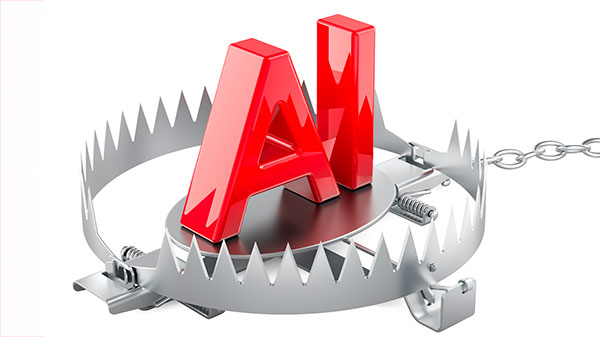
This is not just a missed opportunity; it is a strategic trap.
Surveys from McKinsey, Microsoft, and PwC consistently show that the most widely reported benefits of AI adoption involve cost reduction and efficiency. These gains are real, and leaders are right to pursue them. But if every competitor in your industry uses the same AI models to automate the same administrative tasks, the result is not advantage; it is a higher baseline for survival. Efficiency keeps organizations in the game. It does not help most of them win it.
To win, leaders must recognize AI as a dual engine. The cost engine drives efficiency, reducing labor and time. The differentiation engine drives uniqueness, improving the clarity of ideas, the rigor of analysis, and the depth of customer understanding. It also improves the quality of decision-making, the precision of communication, and the organization’s ability to surface hidden assumptions before they become costly mistakes.
Organizations that intentionally activate both engines will pull ahead. Those that rely on cost alone risk becoming highly efficient commodities.
The cost engine: Visible, measurable, and necessary
The cost side of AI is the most intuitive. It automates work, reduces administrative burden, and streamlines operations. For instance, Walmart uses AI-powered tools to drastically reduce the time managers spend on scheduling, and Amazon uses AI to optimize pick-path routing within warehouses.
These improvements are critical “order qualifiers.” They reduce labor time and increase throughput. However, cost improvements rarely create long-term separation because competitors can easily adopt similar tools. When an advantage is available to everyone via a software subscription, it ceases to be an advantage and becomes a utility.
The differentiation engine: Competing on better decisions, not lower costs
Differentiation involves creating value by doing something unique in ways that competitors cannot easily copy. While the cost engine asks, “How can we do this faster?” The differentiation engine asks, “How can we do this better?”
Some companies are already using AI in this second, more strategic way. UPS, for example, embeds AI into how it evaluates network tradeoffs, manages risk and variability, and makes capacity and service-level decisions under uncertainty. These capabilities sharpen judgment about network configuration, balance efficiency with resilience, and improve decision quality at scale. Here, AI is used in the pursuit of competitive advantage not through faster execution, but through better choices.
A similar pattern appears at P&G, where AI is integrated into the core act of supply chain planning rather than treated as a pure automation tool. Advanced analytics help identify patterns in demand signals, variability, and constraints, but they do not replace human judgment. Instead, they augment it. Planners use AI-generated insight to make more informed decisions about inventory positioning, capacity tradeoffs, and scenario responses, improving service reliability and planning quality. Here again, AI is not deployed to process more transactions faster, but to support more informed and resilient decisions.
These examples illustrate the difference between using AI to complete work and using AI to improve thinking. The cost engine focuses on speed and cost reduction. The differentiation engine focuses on improving decision quality, surfacing assumptions earlier, and deepening customer understanding. The resulting advantage does not come from the AI tools themselves, which competitors can readily match, but from the organizational capabilities that develop when AI is embedded into judgment, learning, and strategic clarity.
The strategic pivot: Reinvesting efficiency into excellence
The primary reason differentiation is undervalued is structural: Cost benefits are immediate and easy to measure (e.g., minutes saved), whereas differentiation benefits are gradual and qualitative (e.g., decision quality). Leaders gravitate toward what is easy to quantify, which tilts investment heavily toward the cost side and leaves the differentiation side underdeveloped.
However, the two engines are complementary, not competing. The strategic unlock lies in the reinvestment loop:
- Extract time: Use the cost engine to reduce low-value administrative work.
- Reinvest capacity: Explicitly redirect that saved time toward the differentiation engine.
Efficiency frees time; differentiation determines how well that time is used. A team that saves 10 hours a week through AI-assisted workflows should not just produce more work. They should use that time for scenario planning, deeper analysis, and high-touch customer engagement.
How to build a dual-engine strategy
Leaders can take four steps to escape the efficiency trap:
- Pursue cost improvements intentionally, not exclusively. Continue to automate drafting, administration and execution to maintain competitive momentum and get more work done faster, but treat these as baseline requirements, not strategic wins.
- Mandate “deep work” reinvestment. Don't just celebrate time saved. Ask teams: “Now that AI has automated the report, how will you use the extra hour to improve the insight?” The goal is also better output, not just more output.
- Use AI to challenge, not just complete. Encourage teams to use AI as a thinking partner to refine arguments, challenge biases, and elevate the quality of customer interactions. This shifts AI from a drafting and execution tool to an idea-improvement tool, which is where strategic separation emerges.
- Balance your metrics. If you only measure speed, you will get speed. Alongside cost metrics, track the quality of insights, communication clarity, and decision outcomes. Balanced metrics prevent the organization from drifting back into a single-engine mindset.
The path forward
AI’s early adoption has been driven by cost savings. But the organizations that lead the next competitive landscape will be the ones that master the differentiation engine. They will not just operate better; they will compete better. Efficiency creates capacity. Differentiation creates advantage. The organizations that commit to both will separate from those that only pursue the obvious side of AI’s value.
SC
MR

More Artificial Intellgience
What's Related in Artificial Intellgience

 Explore
Topics
Business Management News
- Why companies blame the wrong supplier … and miss the real failure
- NextGen Supply Chain Conference unveils agenda focused on AI, execution and the future of leadership
- Supply chain resilience isn’t a data problem; it’s a judgment problem
- Beyond the hype: Building flexible and scalable supply chains in a VUCA world
- Why your supply chain risk management plan will fail
- What options do you really have? Shaping the supply chain resilience funnel
- More Business Management
Latest Business Management Resources

Subscribe

Supply Chain Management Review delivers the best industry content.

Editors’ Picks



